Department of Disaster Management Affairs (Dodma) has reported a funding gap of K46.7 billion for the implementation of a three-month Flood Response Plan (April to June 2026), targeting 81 842 households.
In its 2026 National Flood Response Plan released yesterday, Dodma said that out of the required K48.84 billion, what is available is about K2.67 billion.
Dodma Commissioner Wilson Moleni in an interview yesterday confirmed that the department “needs support from well-wishers”.
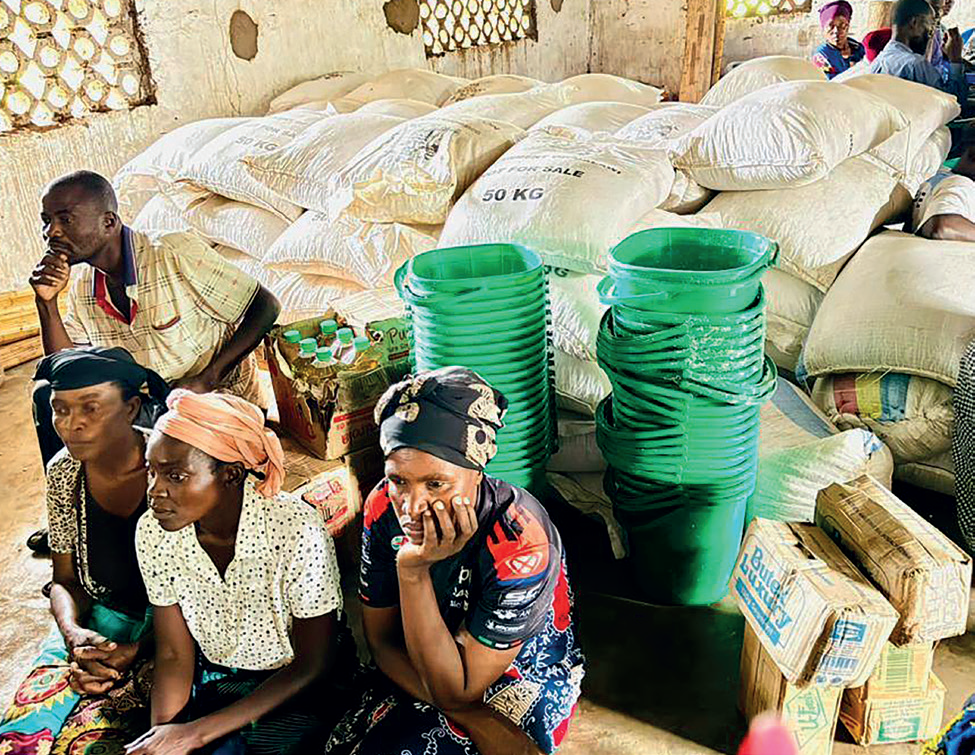
in Mchinji. | Dodma
A summary of the 50-page report reads in part: “Immediate response efforts have focused on search and rescue, shelter support, Wash [water, sanitation and hygiene] interventions and partner coordination.
“However, resources remain inadequate to meet all the needs of the affected population.”
The Food Security Cluster requires the largest share at K33.3 billion to provide immediate life-saving food assistance to the affected population, followed by the Shelter, Camp Coordination and Camp Management Cluster, which requires about K4.25 billion.
The Transport and Logistics Cluster requires K2.6 billion, the Nutrition Cluster K2.2 billion, the Agriculture Cluster requires about K2 billion, the Protection Cluster needs K1.6 billion, the Health Cluster requires K839.7 million, the Education Cluster needs K782 million, Coordination requires K622.5 million, while the Wash Cluster requires about K562.5 million.
Dodma has warned of serious consequences if the response fails, including the risk of hunger and malnutrition, worsening poverty, increased morbidity and mortality, as well as outbreaks of waterborne and communicable diseases.
The National Advocacy Platform (NAP) has since said the K46.7 billion funding gap exposes a serious vulnerability in the country’s disaster preparedness and response system.
NAP chairperson Benedicto Kondowe said in an interview yesterday that, with over 81 000 households affected, the call for urgent support is justified.
Said Kondowe: “Emergency responses often attract weak oversight and risk of abuse, this cannot be allowed to recur. Every kwacha must be traceable to real, timely support on the ground.”
Malawi experienced heavy rainfall between March 15 and March 18 2026, resulting in flooding that affected 23 local authorities.
According to Dodma, 26 213 households were moved to 84 temporary camps, 31 of which are schools. The disaster resulted in the deaths of 37 people and 233 injuries